Thursday, June 30, 2011

Activty 6: States of Matter and Intermolecular Forces

1. Convert 0°F, 32°F, 70°F, and 212°F to Kelvin
0°F- 255.372
32°F- 273.15
70°F-294.261
212°F-373.15

2. States of Matter Simulation Lab by Kelly Vaughan:


3.  In the States of Matter simulation, choose the Solid, Liquid, and Gas Tab at the top of the screen. Choose the water molecule and cool the water to 0 K. Describe how the water molecules are aligned and attracted to each other. Which atoms are attracted to which other atoms?

When I cooled the water to 0 K the molecules slowed down to barely moving at all.  They were all strung together by the hydrogen molecules touching each other.  (red molecule to red molecule)

4.  Switch to the Phase Changes Tab on the States of Matter simulation. Notice how on the bottom right there is a small red dot that indicates where the system is at as far as temperature, pressure and state of matter. Play with the simulation to notice changes, notice that when you push down the pressure can go way up and explode the box. On your blog, report a temperature and pressure required to make oxygen a liquid. This is sometimes how the oxygen exists in pressurized oxygen tanks, perhaps like ones you may use to go diving.

Temperature: 589 K
Pressure: 62-63 ATM

5. List and describe 2 standards that this activity addresses.

D.4.3. Understand that substances can exist in different states-solid, liquid, gas
       -Through the simulations I observed and the changes that are made when water becomes  liquid, solid or gas.

D.4.4 Observe and describe changes in form, temperature, color, speed, and direction of objects and construct explanations for the changes
      - This simulation made it posible to change the temperature of the molecules and then observe the speed that they were traveling and the form they were in.


Activity 5: Density

1. Neutral Lithium Atom:

Protons: 3
Electrons: 3
Neutrons: 3
Density: .534
Neutral Boron Atom:
Protons: 5
Electrons: 5
Neutrons: 6
Density: 2.08

2. Density is the mass per unit volume.  Mathmatically density is defined as mass divided by volume.

d =m/V

3.Density Simulation:


4. Mystery Box


5. Wisconsin Science Standards:

A.4.3 When investigating a science-related problem, decide what data can be collected to determine the most useful explanations
C.4.5 Use data they have collected to develop explanations and answer questions generated by investigations
D.4.1 Understand that objects are made of more than one substance, by observing, describing and measuring the properties of earth materials, including properties of size, weight, shape, color, temperature, and the ability to react with other substances
D.4.3. Understand that substances can exist in different states-solid, liquid, gas


Sunday, June 26, 2011

Activity 4: Exploration of Science Education Standards

To complete Activity 4, choose a sub-standard under each of the Standards A thru H and describe something that you have done either in this class or outside of this class, perhaps in previous classes, that indicates that you have met the sub-standard.

Science Performance Standard A Grade 4

Science, Standard A: Science Connections
Performance Standards - Grade 4

A.4.3 When investigating a science-related problem, decide what data can be collected to determine the most useful explanations
The first experiment that I did for this online visualizing chemistry class involved gather information that would be put together to come to a conclusion.  Substandard 4.3 clearly wants students to be able to record data that they have gained to come to the most useful explanation for their finding.  I answered three questions for the first assignment of this class that involved collecting the data to whether hot or water boils faster?  Whether salt water or regular water freezes faster?  And whether hot water or cold water freezes faster?  Through gathering my information in a table form I was able to come to a conclusion for each of these questions and provide a useful explanation to my findings.
Science Performance Standard B Grade 4

Science, Standard B: Nature of Science
Performance Standards - Grade 4
B.4.1 Use encyclopedias, source books, texts, computers, teachers, parents, other adults, journals, popular press, and various other sources, to help answer science-related questions and plan investigations
In grade school I had to pick a person in history that has developed a major idea in history.  I had to do all the research and present my findings to the class. 
Science Performance Standard C Grade 4

Science, Standard C: Science Inquiry
Performance Standards - Grade 4
C.4.3 Select multiple sources of information to help answer questions selected for classroom investigations
During grade school I remember having to find the answers to a list of questions that were given to us by our teacher.  He would have us look through encyclopedias, science related books, magazines or whatever else was available in our library.  When I was in 4th grade we did not have the internet privileges that children do now.  We were still using the Oregon Trail game.
Science Performance Standard D Grade 4

Science, Standard D: Physical Science
Performance Standards - Grade 4
D.4.3. Understand that substances can exist in different states-solid, liquid, gas
While out doing fieldwork in an elementary classroom we did a science unit on the different states of solids, liquids and gases.  The first experiment that we gathered information from was whether ice or snow melted first.  We would record and discuss the changes in small groups and present the findings to the class.

Science Performance Standard E Grade 4

Science, Standard E: Earth and Space Science
Performance Standards - Grade 4

E.4.4 Identify celestial objects (stars, sun, moon, planets) in the sky, noting changes in patterns of those objects over time
I remember in elementary school on of my teachers presenting a lesson about how the earth rotates around the sun creating daytime and nighttime.  He presented this lesson using a flashlight.  We each had a chance to work with partners to experiment with the globe and flashlight and write down our responses in our science journal.


Science, Life and Environmental, Performance Standards F Grade 4
F.4.2 Investigate* how organisms, especially plants, respond to both internal cues (the need for water) and external cues (changes in the environment)
Something that I have done in many classes, including my own is creating lists of what living things need to survive.  In my 4 year old classroom they grasped onto the topic very fast.  We planted seeds and did daily checks to see if we were giving those seeds what they needed to survive.

Science, Standard G: Science Applications
Performance Standards - Grade 4

G.4.2 Discover* what changes in technology have occurred in a career chosen by a parent, grandparent, or an adult friend over a long period of time

Interviewing a grandparent or older adult friend was a topic that we reported on a lot during 4th/5th grade.  I remember talking to my grandma about why we were doing this project and how I was researching items and she made it very evident that things were not as advanced when she was growing up.  The use of computers on the job was not known of and the technological advances were not there. 

Science, Standard H: Science in Personal and Social Perspectives
Performance Standards - Grade 4

H.4.3 Show* how science has contributed to meeting personal needs, including hygiene, nutrition, exercise, safety, and health care
In my classroom we discuss how the weather, seasons and climate help us make decisions regarding personal needs.  We make a connection to what clothes should be worn; the shelter that you need and the safety concerns that must be addressed.

Thursday, June 23, 2011

Common Molecules, structures and Names

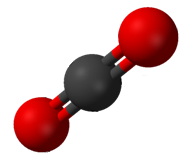
Carbon Dioxide- CO2
Ammonia- NH3


Methane- CH4


Ball and Stick Model for Carbon Dioxide (CO2)
IUPAC name: Carbon Dioxide


Ball and Stick Model for Ammonia (NH3)
IUPAC name: Azane

Ball and Stick Model for Methane (CH4)
IUPAC name: Methane
2.  Post an image from the web, IUPAC name, common name, and the molecule formula.
     1.  IUPAC Name: 5-chloro-2-(2,4-dichlorophenoxy)phenol
          Common Name: triclosan
         Molecule Formula: C12H7Cl3O2


2. IUPAC name: Decamethyl-1,3,5,7,9,2,4,6,8,10-pentaoxapentasilecane
    Common name: Cyclopentasiloxane
    Molecule Formula: C10H30O5Si5


3. IUPAC name: poly(dimethylsiloxane)
    Common Name: Cyclopentasiloxane
    Molecule Formula: (C2H6OSi)n


4. IUPAC Name: isobutane
    Common Name: Isobutane
    Molecule Formula: C4H10


5.  IUPAC Name: 2-Phenoxy-1-ethanol
    Common Name: Phenoxethanol
    Molecule Formula: C8H10O2


6.  IUPAC Name: Nicotinic acid
    Common Name: Niacin
    Molecule Formula: C6NH5O2


7. IUPAC Name: pyridine-3-carboxamide
    Common Name: Niacinamide
    Molecule Formula: C6H6N2O

8. IUPAC Name: 5-[(3aS,4S,6aR)-2-oxohexahydro-1H-thieno[3,4-d]imidazol-4-yl]pentanoic acid
    Common Name: Biotin
    Molecule Formula: C10H16N2O3S


9.  IUPAC Name: Magnesium oxide
     Common Name: Magnesium oxide
     Molecule Formula: MgO


10.  IUPAC Name: (2E)-2-benzylideneoctanal
      Common Name: Hexyl Cinnamal
      Molecule Formula: C15H20O

11. IUPAC Name:Sodium fluoride
     Common Name: Sodium Fluoride
     Molecule Formula: NaF


12. IUPAC Name: Magnesium octadecanoate
     Common Name: Magnesium Stearate
     Molecule Formula:  Mg(C18H35O2)2


13.  IUPAC Name: (2S,3R,4R,5R)-Hexane-1,2,3,4,5,6-hexol
      Common Name: Sorbitol
      Molecule Formula: C6H14O6


14.  IUPAC Name:  Hexadecan-1-ol
      Common Name:  Cetyl Alcohol
      Molecule Formula:  C16H34O


15.  IUPAC Name:  4-Methyl-1,3-dioxolan-2-one
      Common Name: Propylene Carbonate
      Molecule Formula:  C4H6O3


16.  IUPAC Name: propan-1,2,3-triol
      Common Name:  Glycerin
      Molecule Formula:  C3H8O3


17.  IUPAC Name:  Methyl 4-hydroxybenzoate
      Common Name: Methylparaben
      Molecule Formula: C8H8O3


18.  IUPAC Name: Water      Common Name: Water
      Molecule Formula: H2O


19.  IUPAC Name: Octadecanoic acid
       Common Name: Stearic Acid
      Molecule Formula:  C18H36O2


20.  IUPAC Name:  Carbon dioxide
      Common Name:  Carbon dioxide
      Molecule Formula:  CO2


3.  How many bonds does the following element typically have?
Carbon- 4
Hydrogen- 1
Oxygen-2

4.  What doe IUPAC stand for?
International Union of Pure and Applied Chemistry

5. Companies claim that their products are chemical free.  How can that be?

http://www.naturalhealthcareproducts.com/Cleaning-Products.php

I think that when websites such as this one say that their product it chemical free, they mean that a product is not toxic,
 is safe, is healthy, biodegradable, and as close to original form as possible.

Saturday, June 18, 2011

Atoms and Atomic Structure

Model 1: Lithium. 3 Electrons, 3 Protons, 4 Neutrons
(Materials Used: Purple Playdough, Q-tips)

Model 2: Neon, 10 electrons, 10 protons, 10 neutrons
(Materials used: Apple, toothpicks and marshmallows)


Model 3: Sodium, 11 Protons, 11 Electrons, 12 Neutrons
(Materials Used: Water Balloons)
1. What is the atomic number for each of your models?
     Model 1: Lithium-3
     Model 2: Neon- 10
     Model 3: Sodium- 11

2 What is the atomic mass number for each of your models?
    Model 1: Lithium- 6.941
    Model 2: Neon- 20.1797
    Model 3: Sodium- 22.989770

3. In your models, which two subatomic particles are equal?
     Model 1: Lithium- 3 electrons and 3 protons
     Model 2: Neon-  10 electrons and 10 protons
     Model 3: Sodium- 11 electrons and 11 protons

4. How would you make an isotope for one of your models?  What would change with the model?
  I would need to add or remove a neutron, therefore the nucleus would change.

5. Considering the overall volume of your element models, what makes up most of the volume of an atom? 
The overall volume of the element that I made is in nucleus where the protons and neutrons are located.

6. For one of your models, show with another image what happens when evergy excites an electron.


Excited Electron- Moved out a ring
7. Once the electron is excited, what do we typically observe when the electron returns to the ground state?
Once an electron is excited and returns to the ground state is emits a photon of energy which in turn may be seen as light.

8. Why are some elements different colors when they are excited?
The colors that are viewed depends on the amount of energy being released from the electron.  Different elements emit different gases.

9. With the Fourth of July coming up quickly, explain how the colors of fireworks arise.
We see the color from fireworks because electrons that are at ground state are absorbed with energy bringing them to an excited state.  When an electron is at an excited state and returns to a lower energy state, it emits a photon of energy, which is observed as light!  Or many beautiful fireworks!

10. Explain the overall rganizational structure of the periodic table.
-Vertical columns are groups or families.  They contain elements with similar chemical properties.
-Horizontal rows are called periods.  They contain elements in a range of properties from metallic to nonmetallic.
-Some groups have special names: Alakli Metals, Alkaline Earth Metals, Halogens, and Noble Gases.
-They are also sorted by Metals, Nonmetals, and Metalloids

11.  List two example elements for each of these grups or classes:
Alkali Metals: Lithium and Sodium
Alkaline Earth: Calcium and Barium
Halogens: Iodine and Bromine
Noble Gases: Helium and Neon
Transition Metals: Zinc and Gold
Non-Metals: Carbon and Oxygen
Metalloids: Silicon and Boron


Tuesday, June 14, 2011

Activity 1: Scientific Method and States of Matter

Does salt water freeze faster or slower than regular water?


Experiment 1- Salt Water, Regular Water and Ice Cube Tray


Experiment 2- Salt Water, Regular Water and Plastic Cups
2.  My hypothesis to whether salt water will freeze faster or slower than regular water is that the regular water will freeze first because there is nothing added to it.  I would guess that because of the salt being added to the other container of water it is changing the state that it is in and will cause it to freeze at a different temperature.

3.
Experiment 1:
Ice Cube Trays


Time
Regular Water
Time
Salt Water
11:14
Liquid
11:14
Liquid
11:30
Liquid
11:30
Liquid
11:45
Ice crystals are starting to form on the side of ice cube tray
11:45
Liquid
12:00
Thin layer on top
12:00
Small crystals for on edge on top of ice cube tray
12:15
Beginning to freeze, getting hard on top
12:15
More water crystals on top
12:30
Mostly froze, a few water bubbles in the bottom
12:30
Thin layer on top forming
12:45
Froze
12:45
Top is hard, water on bottom


Experiment 2:
Plastic Cups


Time
Regular Water
Time
Salt Water
3:05
Liquid
3:05
Liquid
3:20
Liquid
3:20
Liquid
3:40
A few water crystals are starting to appear around edge of glass
3:40
Liquid
3:55
Thin layer of ice on top of glass
3:55
Water crystals are forming- not many
4:15
Bottom of glass of water is still liquid, but top is getting hard
4:15
Thin layer on top
4:45
Froze
4:45
Top part is getting hard


5. Controlled Variables: Water, ice cube trays, plastic cups, Great Value Brand Salt.

6. I believe that the regular water came to the freezing state first because regular water freezes at 0' F whereas if you add salt to wter, it's reezing point becomes lower. 

7.  Image of atoms that make up water molecules:


8. Animation that shows how water molecules are arranged in the three states of matter for water. (Once link is open click on the word Magnify under the picture.)

Liquid State:

Gas State:
9. Scientific Method: 

  • Ask a Question
  • Do Background Research
  • Construct a Hypothesis
  • Test Your Hypothesis by Doing an Experiment
  • Analyze Your Data and Draw a Conclusion
  • Communicate Your Results
Step 1: Ask a question: Does salt water freeze faster or slower than regular water?
Step 2: Do background research: Has there been other research done?  Researched the topic online.  Also looked at options as to how I wanted to setup this experiment.  Will the kind of salt used make a different?  How much salt should I put in?
Step 3: Construct Hypothesis: I thought that the regular water would freeze first because there has been nothing added to it.
Step 4: Test with an experiment: As my pictures and graph show above, I tested this experiment twice.  I used the same amount of water both times but used ice cube trays and plastic cups.
Step 5: Analyze results/Draw Conclusion: When looking at my results it showed that the regular water froze before the salt water both times that I tested it.
Step 6: Hypothesis is True or Hypothesis is False or partically true:  My hypothesis was true as my data shows the results of a quicker freeze time for regular water.
Step 7: Retest the experiment: This time I used plastic cups instead of the ice cube trays. 
Step 8: Report Results: After performing this experiment for a second time I found that regular water freezes faster than salt water.